
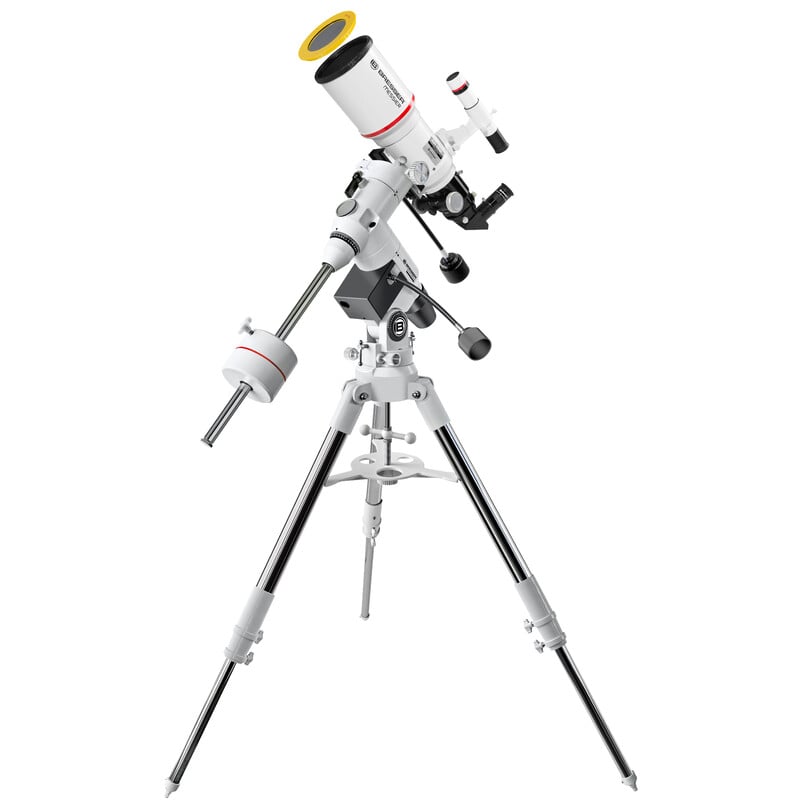
Frequently asked questions about telescopes: stargazing raises many questions. What do you see with a telescope? How do you use it? And which telescope is suitable for your purposes? In this comprehensive overview we answer the 29 most frequently asked questions, grouped by topic. So you can be sure you're off to a good start.
Basic questions about telescopes
1. What is the difference between a telescope and a stargazer?
Both terms are often used interchangeably. Technically, a stargazer is usually a lens telescope (refractor). But in practice, people mean the same thing by both: an instrument for observing the sky.
2. What is the difference between a refractor and a reflector?
A refractor uses lenses and is good for moon and planets. A reflector uses mirrors and is better for deep-sky objects such as nebulae. Refractors are low maintenance, reflectors sometimes need collimation.
3. What do focal length and aperture mean?
The opening determines how much light the telescope catches. The focal length determines, along with the eyepiece, the magnification. The larger the aperture, the more detail you see.
4. How much magnification do I need for planets?
Between 80x and 150x is ideal. More magnification does not automatically mean a sharper image. Air quality and eyepiece also determine how much detail you see.
5. What is a good telescope for children?
A compact, easy-to-use telescope such as the Sky-Watcher Heritage 100P or the Celestron StarSense 70AZ is ideal for children.
What can you see with it?
6. What do you see through a telescope in clear weather?
The Moon in detail, the rings of Saturn, the moons of Jupiter, the phases of Venus and - with some practice nebulae and galaxies.
7. Can you see planets with a small telescope?
Yes. Even with a 70 mm telescope, you can see Jupiter and Saturn. Details increase with telescope aperture.
8. Can you see deep-sky objects with a beginner's scope?
Yes, but subtle. Think of the Orion Nebula or the Andromeda Nebula. You can hardly see colors, but you can see bright spots or structures.
9. Why don't I see colors like on NASA-pictures?
NASA photos are composite and often with long exposure times. Visually, you see mostly white, gray or soft yellow.
10. Can you really see Saturn's rings?
Sure. Even with a good quality entry-level model, you can see the rings clearly - a magical moment for any beginner.
Usage and settings
11. How do you focus a telescope?
Use the focus wheel while looking at an object. Always start with a low magnification eyepiece (e.g., 25 mm) and work up.
12. How do I point a telescope at a planet?
Use a red dot finder or viewfinder and start with a bright object such as the moon. Then find Jupiter or Saturn with an app like Stellarium or SkySafari.
13. Why can't I see anything through my telescope?
Possible causes: incorrect focus, caps not removed, wrong eyepiece, or poor viewfinder alignment.
14. How does an eyepiece work?
The eyepiece determines the magnification. You change them depending on what you want to see. A 25 mm is for wide fields, a 10 mm for more detail.
15. What is collimation and should I do it?
Collimation is the alignment of mirrors in a reflector. It is important for a sharp image. In refractors, collimation is not necessary.
Accessories & upgrades
16. What eyepieces do I need?
A combination of 25 mm (wide image), 10 mm (planets) and possibly a 6 mm for details. Avoid cheap low quality 4 mm eyepieces.
17. What does a Barlow lens do?
A Barlow doubles or triples the magnification of your eyepiece. Note: useful only with good optics.
18. Do I need filters for planets or the moon?
Not mandatory, but a moon filter attenuates bright light and color filters can enhance details on Jupiter or Mars.
19. What is a moon filter and do I need one?
Yes, if you look at the Moon often. It dampens the bright light so your eyes are less blinded and you see more contrast.
20. How does sunscreen work and is it safe?
A solar filter is placed in front of the telescope aperture. Only then is it safe. Never use a filter behind the eyepiece. Buy only reliable brands.
Smart telescopes & astrophotography
21. What is a smart telescope?
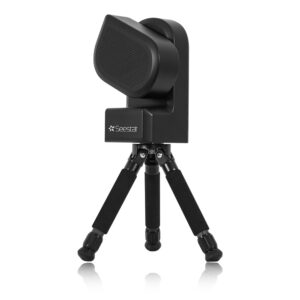
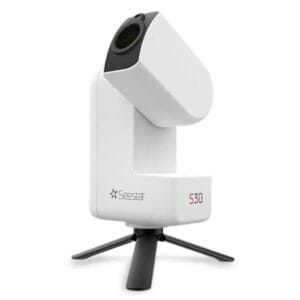
A smart telescope is a fully automated telescope with a camera, such as the Seestar or Vespera. You control it through an app.
22. Can I take pictures with a beginner's scope?
Yes, of the Moon or Jupiter via your smartphone. For deep-sky, you need a tracking motor or smart telescope.
23. Do I need a tracking system?
For photography: yes. For visual use, it is not mandatory, but it is convenient.
24. What is the difference between visual viewing and astrophotography?
Visually, you see faint objects in shades of gray. Photography allows long exposures, with much more color and detail.
Purchase & advice
25. Which telescope should I buy as a beginner?
Start with a 70-130 mm refractor or reflector from a well-known brand. Avoid models with vague claims of extreme magnification.
26. What does a good telescope cost?
Between €150 and €400 for beginner models. Smart telescopes or astrophotography equipment are higher.
27. What is the best telescope under €300?
For example, the Sky-Watcher Heritage 100P, Bresser 130/650 Dobson or Celestron StarSense 70AZ.
28. Can I rent a telescope for testing?
Yes, with our partners you can rent telescopes during your stay in which you can test our telescopes prior to purchase.
29. What should I look for at a telescope store?
Look for expertise, honest product information, good customer service and an offering that grows with you. Avoid toy stores and general electronics providers: they often lack specialized knowledge or support. At Telescoop.com, you do get targeted advice, smart selection tools and access to experts who are actively stargazing themselves.
Still have questions after this list? Use our chatbot AstroBob at the bottom right of the page, or check out our choice guide To find your first telescope.

 Dutch
Dutch English