

What are constellations: A constellation is a recognizable group of stars in the sky that together form a figure, often based on myths, animals or objects. People have used constellations for thousands of years to tell stories, navigate and - in astrology - to relate character traits and predictions of the future.
Although you can often see only the brightest stars with the naked eye, in dark skies you can quickly recognize shapes. Consider the three stars of the belt of Orion, or the saucepan shape of the Big Bear. These patterns have been categorized and named over the centuries. Modern astronomy officially recognizes 88 constellations, established by the International Astronomical Union.
What are the most famous constellations?
Some constellations are so recognizable that you've probably seen them before, even without knowing their names. Here are a few classics that are often recognized first:
- Orion - recognizable by its three belt stars; visible in winter.
- Great Bear (Ursa Major) - contains the famous saucepan shape; helps you find the North Star.
- Cassiopeia - Has a distinct W or M shape; well visible to the north.
- Scorpius - really looks like a scorpion; visible in the summer months.
These shapes are not only useful as reference points for other stars, but also rich in mythical stories.
How can you recognize constellations?
Learning to recognize constellations takes practice, but a few tools will get you a long way. A good approach:
- Use a star map or an app such as SkySafari or Stellarium.
- Start with bright constellations such as Orion or the Great Bear.
- Note patterns, such as straight lines or curves.
- Observe throughout the year - many constellations are seasonal.
- If possible, go to a dark spot outside the city; light pollution makes it much more difficult.
For beginners, books such as “Stargazing explained simply” by Klaus M. Schittenhelm very accessible.
What do constellations mean in astrology?
In addition to their role in astronomy, constellations also play a central role in the astrology. Here it is not about observable patterns in the sky, but about the twelve astrological signs of the zodiac. Each sign is linked to a period of the year and is associated with certain character traits.
A few examples:
- Aries (March 21-April 19): energetic, courageous, impulsive
- Virgo (Aug. 23-Sept. 22): analytical, precise, subservient
- Aquarius (Jan. 20 - Feb. 18): innovative, free-thinking, intellectual
Although astrology is not scientifically based, horoscopes and constellation analyses remain wildly popular and culturally significant.
Constellations connect ancient stories with modern fascination. They bring structure to the night sky, help orient us and give meaning to what we see above us. Whether you are interested in astronomy, astrology, or just want to take advantage of a beautiful summer evening to stargaze - constellations are a brilliant gateway to the universe.
Want to learn how to recognize them yourself? Then visit telescope.com for practical guides and helpful tips for discovering constellations. Stargazing begins with wonder - and a little knowledge.
Where do constellations come from?
The origins of constellations date back to the oldest civilizations. As early as ancient Babylon, stars were linked together to form patterns to track the movement of celestial bodies and determine the seasons. This knowledge spread through the Greeks and Romans to the West, where they were systematically described.
The Greek astronomer Ptolemy described 48 constellations in the 2nd century AD in his work Almagest. Many of these figures, such as Andromeda, Perseus and Hercules, are based on Greek mythology. They form the basis of the current constellation system used in the Western world.
It was not until the 20th century that this system was standardized by the International Astronomical Union (IAU), bringing the total to 88 official constellations brought. This classification is no longer based only on visible patterns, but also on exact boundaries in the sky dome - similar to maps.
Constellations in other cultures
Although in Europe we often stick to classical Western constellations, other cultures have constructed their own starry skies. In Chinese astronomy, the sky is divided into 28 lunar stations, and dragons, tigers and other symbols are dominant in the imagery.
Also, the Incas, Aborigines and Navajo saw their own figures in the stars. Where we regard empty spaces as ‘nothing,’ they actually saw shapes in the dark part of the Milky Way. This underscores how culturally determined our interpretation of the night sky is - and how universal is the need to connect stories to the night sky.
Why constellations still fascinate
In an age of satellites and space telescopes, constellations continue to have something timeless about them. They are accessible, recognizable and invite wonder. For children, they are often the first contact with astronomy. For adults, they offer orientation to the sky and a sense of connection to the past.
Constellations are also practical. Many star charts and telescope apps use constellations as references, making it easier to locate objects such as planets, nebulae and star clusters. Consider the Orion Nebula in the constellation Orion, or the Andromeda Nebula in Andromeda.
In addition, constellations serve as a bridge between astronomy and culture. They connect hard science with human stories - making the night sky understandable to everyone, regardless of knowledge level.
Whether you view constellations out of interest in mythology, as an aid to stargazing, or simply to stare up at night and recognize something: they remain a valuable part of our human perspective on the universe. And the best part is - you don't need anything for it, except a clear sky.
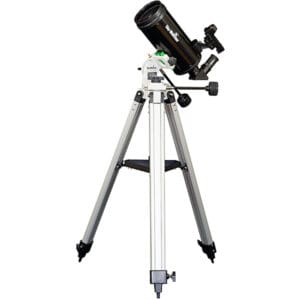
Want to learn more about constellations and how to recognize them with the naked eye or a telescope? Then check out our practical guides at telescope.com - where you will also find tips on the best times to spot specific constellations and how to prepare your first observing session.





 Dutch
Dutch English