
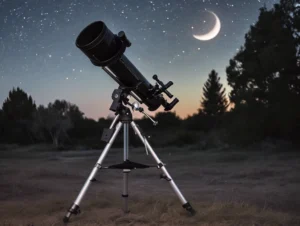
A adjust telescope is one of the most important steps for anyone who wants to observe the universe clearly. Whether you want to view the craters of the moon, the rings of Saturn or a distant nebula-without proper adjustment, your image will remain blurry or unstable.
In this practical guide, we explain how to optimally set up your telescope. This applies to both beginners and advanced observers.
1. Start with the right location if you want to observe deep sky objects
Good observation starts with where you place your telescope. Light pollution, air vibrations and obstacles can seriously affect image quality. For planets, light pollution matters less
Tips for optimal observation location:
- Find dark places: Get away from city lights. Places with little artificial light give much better views of the night sky.
- Check conditions: Use apps such as Clear Outside or MeteoBlue to check clouds, seeing and humidity.
- Pick a good time: Just after sunset or before sunrise, the atmosphere is often most stable.
2. Provide a stable telescope setup
Even a perfectly adjusted telescope will produce poor images if the tripod is unstable or the ground is shaky.
This is how you avoid vibrations:
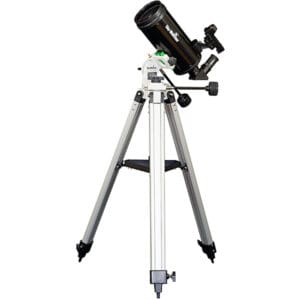
- Use a robust tripod, preferably metal or with adjustable legs.
- Put your telescope on a flat, soft ground such as grass or soil.
- Weight the tripod with a weight or sandbag for added stability.
- Avoid hard surfaces such as tile or concrete that amplify vibrations.
3. Adjust viewfinder and focus properly
Now that your telescope is solid, it's time to make sure you find objects easily and have sharp images.
Viewfinder alignment:
- During the day, point your telescope at a stationary object, such as a pole or chimney.
- Make sure this object is exactly in the center of the eyepiece.
- Next, set the finder so that it shows the same point.
- Check again at night with a bright star or planet.
Focusing:
- Use a bright object (moon, bright star) to focus.
- Slowly turn the focus knob until the image is in focus.
- Use a good quality eyepiece - cheap eyepieces can deteriorate the image.
4. Collimation: aligning mirrors precisely.
For reflecting telescopes (such as Newton reflectors) is collimation crucial. This is adjusting the internal mirrors so that the light path comes together perfectly.
Perform collimation:
- Use a collimation eye piece or laser collimator.
- See if the reflection of the main mirror is central.
- Tighten the collimation screws by small increments.
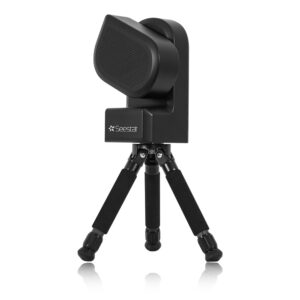
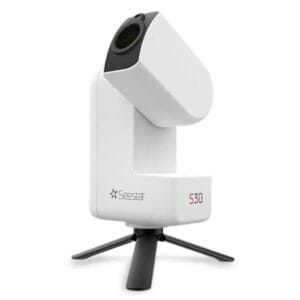
Notice: Refractors (such as the StellarVision) and smart telescopes (such as the Seestar S50 or Vespera II) usually do not require collimation.
5. Final fine tuning for perfect vision
Even after tuning, minor problems can arise. Here are some common issues and their solutions:
| Problem | Solution |
|---|---|
| Blurred image | Check focus and use a better eyepiece |
| Image shakes due to wind | Use a windbreak or choose sheltered location |
| Hard to find objects | Check the alignment of the viewfinder |
| Poor visibility | Avoid humid or turbulent air, check weather conditions |
Want to get more out of your observations? Take a look at our telescope selection guide Or find out which accessories for stability and sharpness making a difference.
6. Allow your telescope to acclimate
An often overlooked but crucial part in the adjust telescope, is to let your telescope acclimate. Telescopes, in fact, need time to adjust to the outside temperature. If your telescope has just come from inside and it is a lot colder outside, internal air currents and temperature differences can cause distorted images. Especially with reflector telescopes, you then see a kind of vibrating or dancing image.
🔹 This is how you do it:
- Put your telescope outside for at least 30 to 60 minutes before use.
- Leave the caps off the optics to allow air to flow freely.
- If necessary, use a fan (for larger mirrors) to cool the main mirror faster.
For visual observations, this is often sufficient. For astrophotography, a stable temperature balance is even indispensable for sharp shots. This simple part of your routine can significantly improve your image quality-without having to modify anything about the optics themselves.
Summary: this is how to perfectly adjust your telescope
- Choose a dark, stable location with little light pollution.
- Provide a sturdy tripod On a flat surface.
- Line your viewfinder well out with your eyepiece.
- Enter a collimation out if you have a reflector.
- Optimize with a good focus and fine tuning.
🔭 Ready to explore the sky with razor-sharp images? By adjusting your telescope correctly, you'll see more than ever before.


 Dutch
Dutch English