
Oculairs en Barlows
Resultaat 1–20 van de 244 resultaten wordt getoondGesorteerd op populariteit


- Prijsklasse: 12,90 tot 49,90 Opties selecteren Dit product heeft meerdere variaties. Deze optie kan gekozen worden op de productpagina
- 69,00 Opties selecteren Dit product heeft meerdere variaties. Deze optie kan gekozen worden op de productpagina





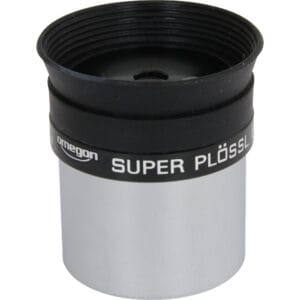
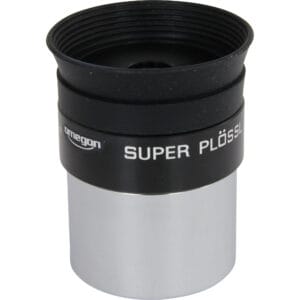

Resultaat 1–20 van de 244 resultaten wordt getoondGesorteerd op populariteit
Welk oculair heb je nodig?
Een oculair is de lens waar je doorheen kijkt. Samen met je telescoop bepaalt het de vergroting, hoe scherp het beeld is en hoeveel hemel je tegelijk ziet. Met dezelfde telescoop zie je met een ander oculair een heel ander beeld.
De meeste telescopen komen met één of twee eenvoudige oculairs. Daar kun je prima mee beginnen, maar met een tweede of derde oculair haal je veel meer uit dezelfde telescoop.
Welke brandpuntsafstand kies je?
Elk oculair heeft een brandpuntsafstand in millimeters. De vergroting reken je uit door de brandpuntsafstand van je telescoop te delen door die van het oculair. Een telescoop van 1200 mm geeft met een 10 mm oculair 120x vergroting, met een 25 mm oculair 48x. Meer rekenvoorbeelden staan in onze uitleg over oculairs.
Hoge vergroting (3 tot 8 mm)
Voor details op de maan en planeten, zoals de ringen van Saturnus en de wolkenbanden van Jupiter. Werkt het best in een rustige nacht en met een goed gecollimeerde telescoop.
Gemiddelde vergroting (9 tot 15 mm)
Het bereik dat je het vaakst gebruikt: maan, planeten en kleine deep-sky objecten zoals bolhopen en planetaire nevels.
Lage vergroting (16 tot 32 mm)
Om objecten op te zoeken en voor grote objecten zoals de Orionnevel en het Andromedastelsel. Het beeld is ruimer en rustiger.
Meer vergroting is niet altijd beter. Reken als grens op ongeveer twee keer de opening van je telescoop in millimeters: een telescoop van 100 mm gaat tot zo’n 200x. Daarboven wordt het beeld groter, maar niet scherper.
Welk type oculair past bij jou?
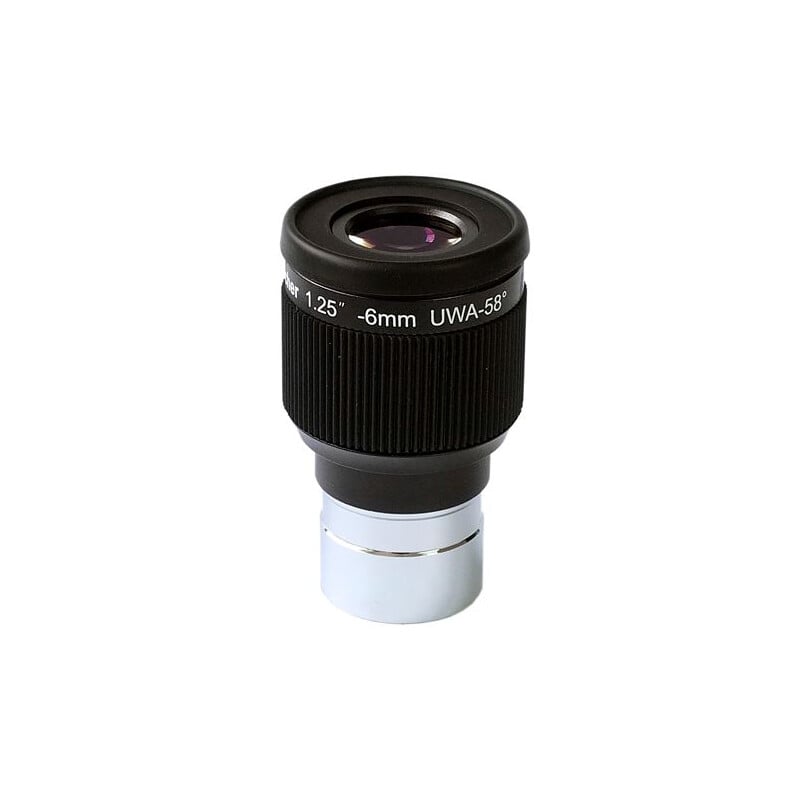
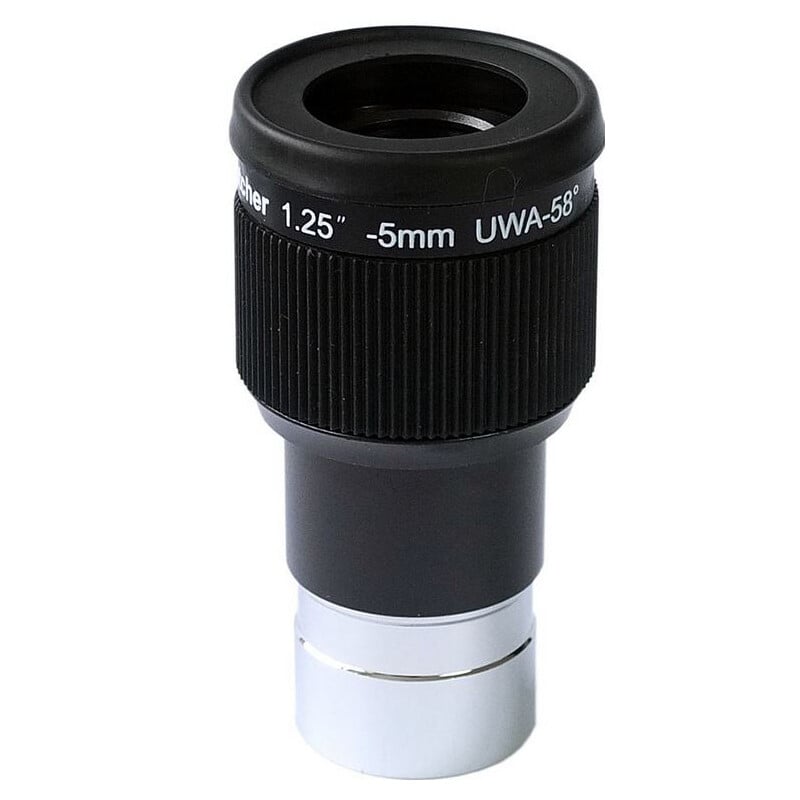
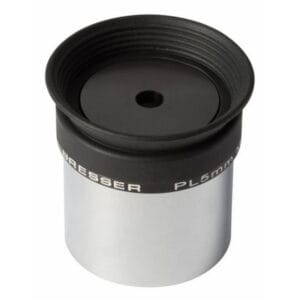
Standaard oculairs, zoals Plössl, hebben een beeldveld van ongeveer 50 graden. Ze zijn scherp en betaalbaar, maar je kijkt een beetje als door een tunnel.
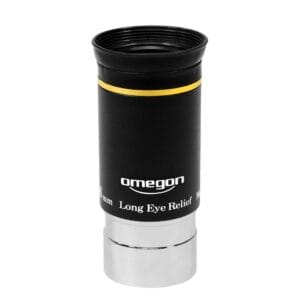
Groothoekoculairs hebben een beeldveld van 68 tot 82 graden, sommige 100 graden of meer. Je ziet meer hemel tegelijk, en bij een telescoop zonder volgmotor blijft een object langer in beeld.
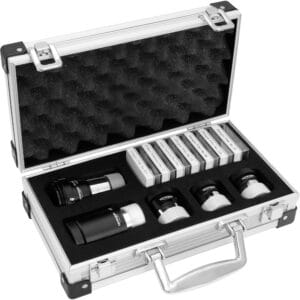
Een zoomoculair vervangt meerdere losse oculairs, bijvoorbeeld van 8 tot 24 mm. Met een oculairset heb je in één keer een reeks vergrotingen.
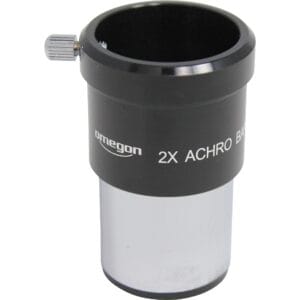
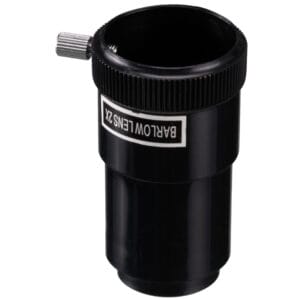
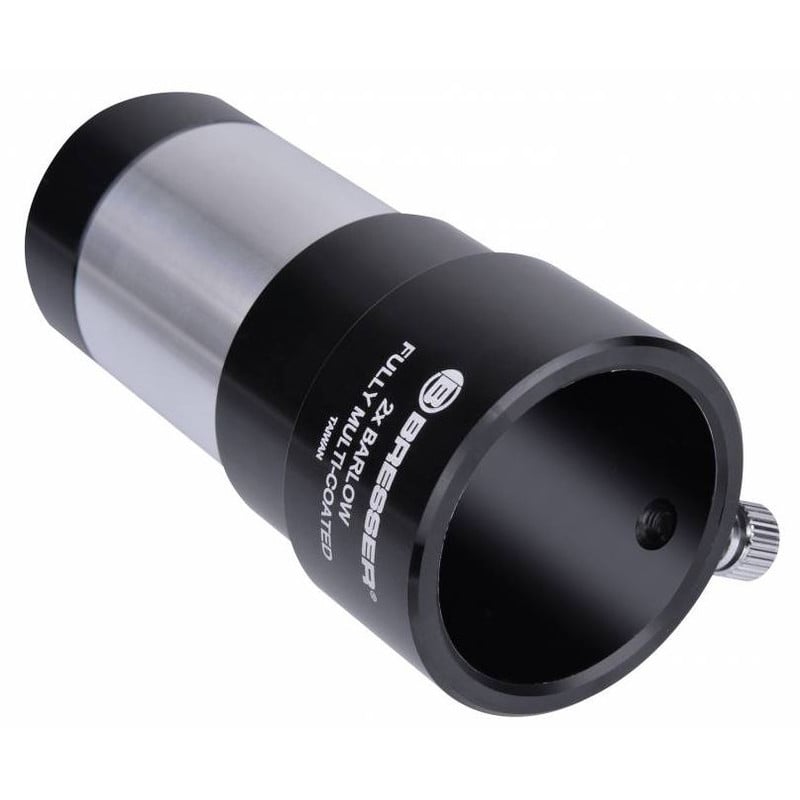
Een barlowlens zet je voor je oculair. Een 2x barlow verdubbelt de vergroting van elk oculair dat je al hebt, een 3x barlow verdrievoudigt hem.
Wat is eye relief?
Eye relief is de afstand tussen je oog en de lens waarop je het hele beeld ziet. Bij een korte eye relief moet je je oog bijna tegen het glas houden. Draag je een bril, kies dan een oculair met minimaal 17 tot 20 mm eye relief, dan kun je je bril ophouden.
Hoeveel oculairs heb je nodig?
Begin met drie: een overzichtsoculair van 25 tot 32 mm om objecten te vinden, een oculair van 12 tot 15 mm voor de maan en deep-sky, en een oculair van 5 tot 7 mm voor planeten en dubbelsterren. Liever drie goede dan een koffer vol oculairs die elkaar overlappen.
Past elk oculair op mijn telescoop?
Check de maat van je focuser. 1,25 inch (31,75 mm) is de standaard op vrijwel alle telescopen. Grotere telescopen hebben ook een 2 inch aansluiting (50,8 mm) voor oculairs met een heel breed beeldveld.
Twijfel je welk oculair bij jouw telescoop past? Stuur ons het model via mail of WhatsApp, dan zoeken we het voor je uit.